

Reverse Cycle vs Split System Air Conditioning: What’s the Difference?
26th November, 2026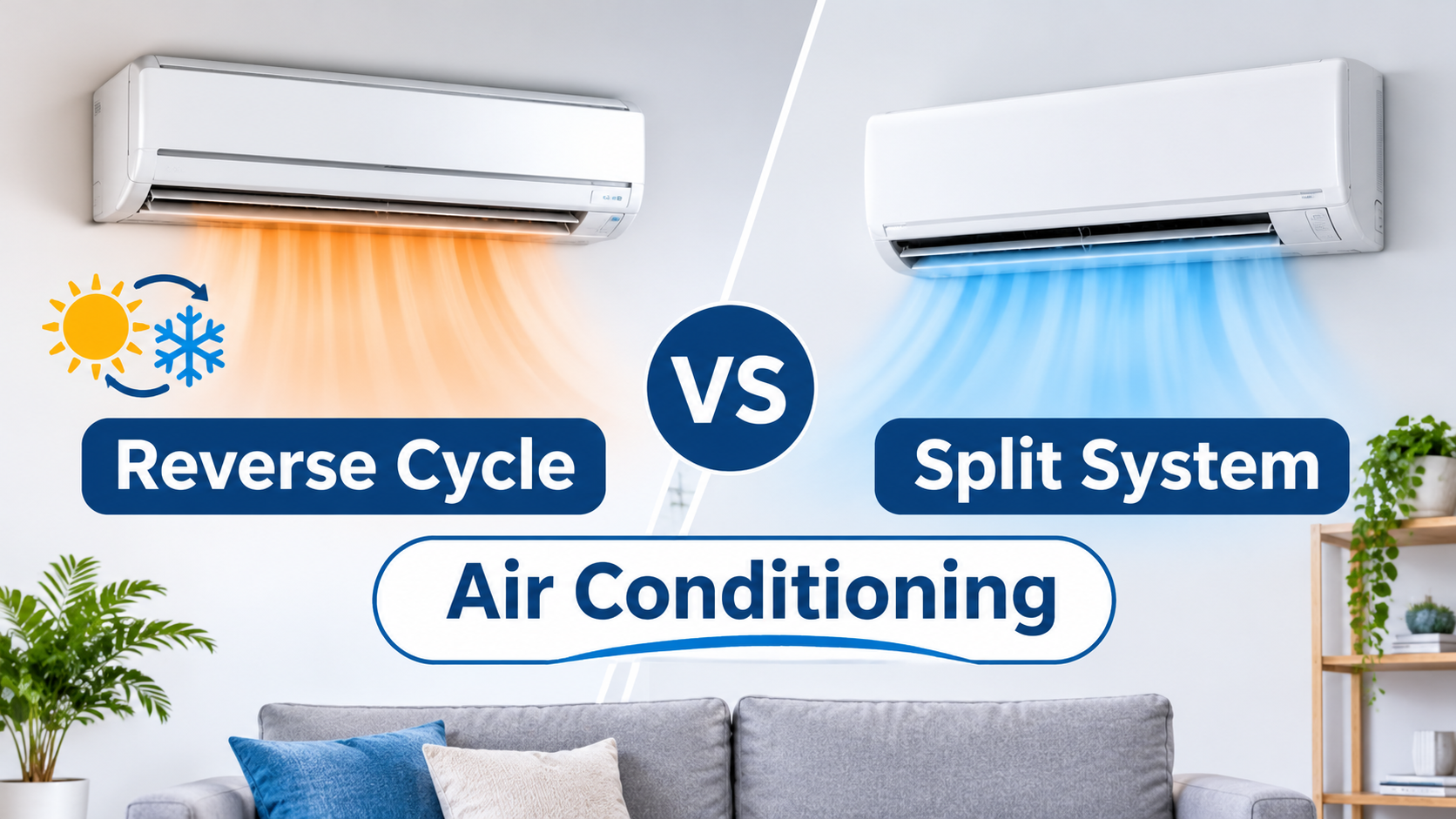
If you have been shopping for a new air conditioner in Adelaide, you have likely come across both terms. Reverse cycle and split system air conditioning are often mentioned as if they are opposites, but the relationship between them is not quite that simple.
Understanding what reverse cycle vs. split system air conditioning actually means will help you make a smarter decision before installation, whether you are cooling a bedroom, a whole home, or a commercial space.
What Is Reverse Cycle Air Conditioning?
Reverse cycle air conditioning refers to how a system heats and cools. Rather than generating heat from a separate source, it uses a refrigerant cycle that can run in both directions, drawing warmth from outside air in winter and removing heat from inside air in summer.
This makes it a year-round climate control solution from a single unit and generally more energy efficient for heating than electric strip heaters or gas, which matters in Adelaide, where both summer heat and winter chill are genuine concerns.
What Is Split System Air Conditioning?
Split system air conditioning describes the physical format of a unit: an indoor wall unit and an outdoor condenser, connected by refrigerant lines and electrical cabling.
This configuration requires no ductwork, making installation simpler than a ducted system. Split systems suit individual rooms or zones and come in a range of capacities to match spaces of different sizes.
Reverse Cycle vs Split System: Key Differences
These two terms describe different things. A reverse cycle describes a function, specifically the ability to both heat and cool. A split system describes a physical format.
Most split systems sold in Australia today are reverse cycle, so the same unit cools in summer and heats in winter. Some split systems are cooling-only. The alternative physical formats, including ducted, ceiling cassette, and under-ceiling systems, can also be reverse cycle.
Can a Split System Also Be Reverse Cycle?
Yes, and most modern ones are. When you see a split system advertised as reverse cycle, it means the indoor wall unit can switch between cooling and heating modes using the same refrigerant technology. For most Adelaide households, a reverse cycle split system is the most practical choice for a single room or open-plan area.
If you only need cooling, a cool-only split system will typically cost less upfront. But given Adelaide winters, a reverse cycle unit tends to offer better long-term value.
Which System Is Best for Your Home in Adelaide?
For most Adelaide homes, a reverse cycle split system offers the right balance of cost, efficiency, and flexibility. It handles hot summers and cool winters without a separate heating solution, and installation involves no ductwork.
Homes with multiple rooms to condition may benefit from a ducted reverse cycle system instead, which delivers consistent temperature control throughout the whole house. For air conditioning installation in Adelaide, getting the sizing and system type right from the start avoids costly adjustments later.
What Should You Consider Before Installation?
A few factors will shape which system works best for your situation:
- Room size and layout: Split systems suit single rooms or open-plan areas. Larger homes may need multiple units or a ducted solution.
- Heating requirements: If you need heating as well as cooling, confirm the unit is reverse cycle, not cool-only.
- Energy efficiency: Look for a high energy star rating. Reverse cycle systems are among the most efficient heating options available.
- Budget: Split systems have a lower upfront cost than ducted installations. True Air provides honest quotes with no hidden costs; visit trueairac.com.au for more.
Is Reverse Cycle or Split System Air Conditioning Better for Businesses?
Commercial spaces have different demands from residential installations. Open-plan offices, retail environments, and industrial settings need systems that cover larger areas with consistent airflow, where ceiling cassette, ducted, and under-ceiling systems are common choices.
True Air provides commercial air conditioning repair and installation services across Adelaide for businesses of all sizes.
Frequently Asked Questions
Can a split system air conditioner provide heating in winter?
Yes, if it is a reverse cycle model. A reverse cycle split system extracts heat from outside air even on cold days and transfers it inside, making it an efficient heating option for Adelaide winters.
Is reverse cycle air conditioning cheaper to run?
Reverse cycle systems are generally more efficient for heating than electric strip heaters or gas, since they move heat rather than generate it. Running costs depend on the system's Energy Star rating, the size of the space, and usage patterns.
Is reverse cycle air conditioning suitable for Adelaide winters?
Yes. Modern reverse cycle systems continue to operate effectively even at low outdoor temperatures. Adelaide winters are mild enough that reverse cycle heating is well-suited to the climate without the efficiency losses seen in colder regions.
Should I choose split system or ducted air conditioning for my home?
Split systems suit individual rooms or smaller homes and have lower installation costs. Ducted systems provide whole-home comfort from a single installation and are ideal for larger properties. True Air can assess your home and recommend the right system and arrange a quote tailored to your property.


